
01 / UNDERSTANDING YOUR CARE
A clearer picture.
A scan showing a stone does not automatically mean surgery. Some small stones may pass, while a larger stone or one blocking urine may need a procedure. Your symptoms, kidney function and signs of infection help determine the next step.
People sometimes call these stones “pathri”. Bring the actual scan images as well as the report, even if the pain has settled. Your doctor can explain whether monitoring is reasonable and which changes need urgent attention.
Seek urgent medical care for fever or chills with stone pain, inability to pass urine, uncontrolled pain or repeated vomiting. Do not wait for a routine appointment.
How your concern is assessed.
Your consultation may include a review of previous stones, medicines and other health conditions. Urine tests, kidney function tests, ultrasound or a CT scan may be advised depending on what is already known.
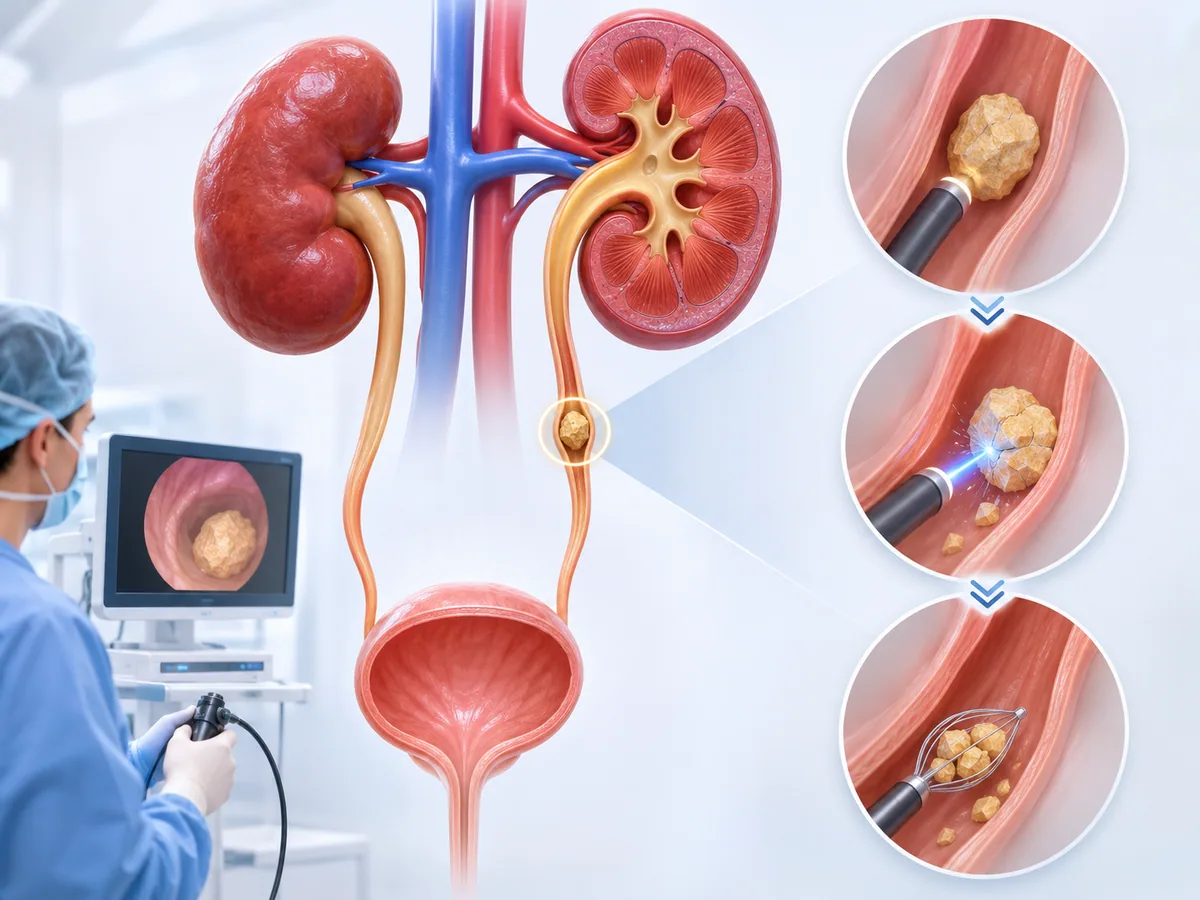
Ask where the stone is, whether urine flow is blocked, and how the options compare. Kidney stone laser surgery is one possible approach; the choice also depends on stone size, position, infection and your overall health.
What to discuss with your doctor.
- Pain in the side or back that may move towards the lower abdomen or groin
- Blood in the urine, burning or repeated urges to pass urine
- Nausea or vomiting with pain; fever or chills need urgent assessment
Care options explained.
Your doctor will discuss which options fit your assessment.
Observation and symptom care
Selected small stones can be monitored with a clinician’s plan for pain relief and follow-up. Do not assume every stone will pass on its own.
RIRS surgery and ureteroscopy
A thin telescope can reach stones through the urinary passage. A laser may break them into smaller pieces. A temporary stent or another treatment session may be needed.
PCNL and other options
PCNL uses a small opening through the back to access a kidney stone. It may be considered for larger stones. Your doctor will explain alternatives and confirm where a suitable procedure can be arranged.
Benefits, limits and possible risks.
Possible procedure risks include bleeding, infection, injury and stent discomfort. Some stones need more than one session. Recovery and discharge timing vary; ask for advice based on your own scan and health.
Before your consultation.
- Bring ultrasound or CT images, urine reports and kidney function results you already have.
- List current medicines, allergies, previous operations and any blood-thinning medicines. Do not stop prescribed medicines yourself.
- Confirm consultation timing and procedure availability before travelling from Katihar, Araria or Kishanganj.
A few common questions.
Does every kidney stone need an operation?
Will a stent be needed?
What will treatment cost?
Sources & further reading.
General information supports your consultation; it cannot diagnose your symptoms. Your doctor will explain which care is suitable for you.
Plan your consultation in Purnia.
Meet Dr. Md Taquedis Noori, MBBS, MS (General Surgery), MCh Urology, at Glisan Akbari Super Speciality Hospital, Dharamshala Road, Line Bazar, Purnea. Bring your existing reports and a medicine list.
Confirm the appointment, fees and any proposed procedure with the team before travelling from Purnia, Katihar, Araria or Kishanganj. Ask about the follow-up plan and any symptoms that should bring you back sooner.
Book with Dr. Noori